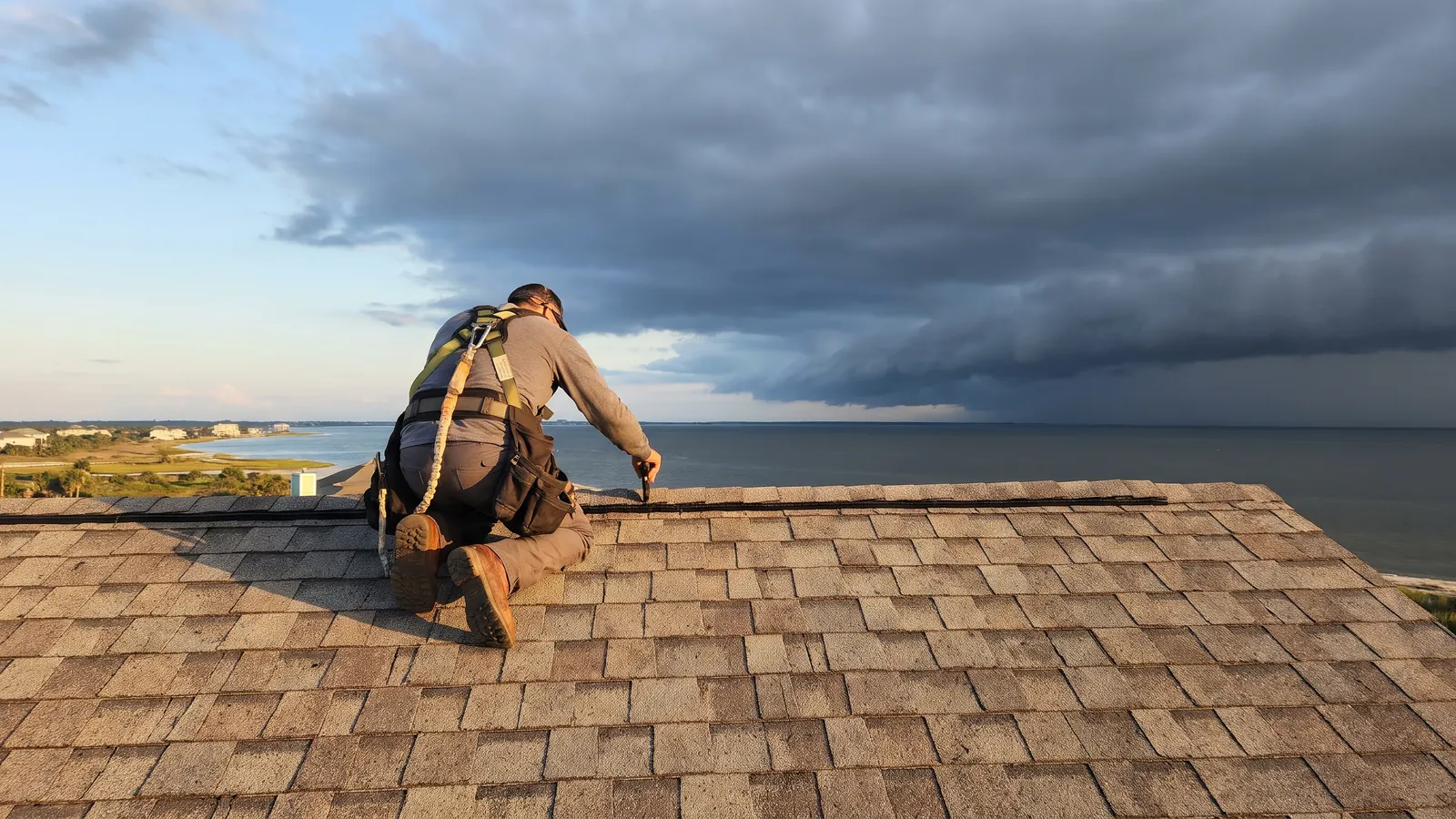
Getting your roof ready for hurricane season
Hurricane season runs June through November. The time to find a loose ridge cap is a calm day in April, not the night before landfall.
What you can check yourself
- Walk around the house and look for missing, lifted or cracked shingles and tiles
- Clear gutters and downspouts so heavy rain can drain
- Trim branches that hang over the roof or touch it
- Look in the attic for stains, daylight or damp insulation
- Photograph the roof and the interior now, so you have "before" pictures for any claim
- Find your insurance policy and note the hurricane deductible
What a roofer should check
- Ridge and hip caps, rake edges and drip edge, where wind gets a grip first
- Flashing at walls, chimneys and vents
- Loose or broken tiles and how they are fastened
- The connections between the roof and the walls, seen from the attic
Upgrades worth knowing about
When a roof is being replaced anyway, it is the moment to strengthen it: re-nailing the deck, a sealed secondary water barrier, and wind-rated materials. Florida's My Safe Florida Home program offers matching grants up to $10,000 for qualifying hurricane mitigation work on owner-occupied homes, roof reinforcement included. See the financing page for the eligibility rules.
When a storm is coming
Secure or bring in anything that could blow onto the roof: patio furniture, potted plants, loose boards. Don't climb onto the roof to "tie things down" as winds rise. After the storm, call the line before you go up; it answers 24/7.
Common questions
Can you inspect my roof before hurricane season?
Yes, and spring is the best time to book. The inspection is free.
Does My Safe Florida Home pay for a new roof?
It offers matching grants for qualifying mitigation work, including roof reinforcement, on eligible homes. Eligibility rules apply, including the home's original permit date and insured value.